BROWSER GAMES / AI BROWSER GAME JAM 5
Heat is a budget: Torched! and WICK
Two browser jam games turn a flame into a question of control, cost and responsibility.
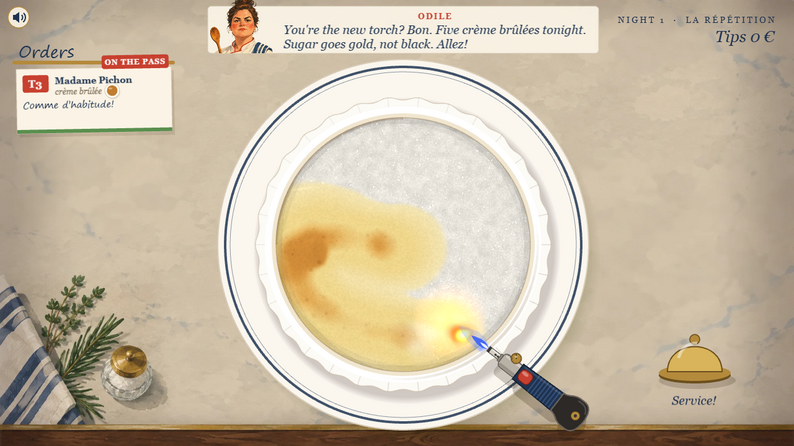
What caught my attention in Torched! and WICK is how much responsibility each gives a small flame. Both appear in AI Browser Game Jam 5, but they suggest different kinds of pressure. Torched! asks where heat should go and when to move it. WICK asks how much of yourself a route is worth.
Torched!: move the heat
Erathul describes a cooking game built around sweeping a kitchen torch over food to caramelize it. Leave the flame in place too long and it burns. Serving requests therefore depends on controlling heat across a surface. The interesting decision is when to stop improving one patch and give another some attention: extra care can become the cause of failure.
The production credits are unusually specific. Erathul assigns the sugar simulation, shader and flame work to Opus, while Sonnet handled service, interface and input work, plus image and audio processing. Claude Code is credited across implementation, tests and text. Human direction, decisions, playtesting and audio selection remain explicit parts of the process.
That division becomes concrete in one bug report: Erathul says human playtesting found a recurring newspaper-display bug that automated checks missed. The developer was still responsible for looking at what the system actually showed.
WICK: spend a little of yourself
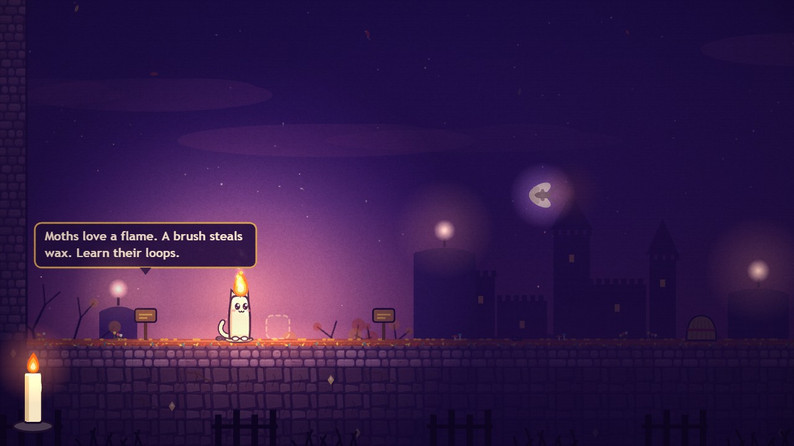
WICK, by HallucinatedGames, gives its candle-cat a resource with several jobs. Wax supports health, light and movement, and can also become temporary steps or blobs that can later be reclaimed. Building a way forward means spending the material that keeps the character going. A useful foothold and a smaller safety margin can be the same decision.
Here, the developer credits prompted Claude Code and Opus with code, levels, procedural Canvas2D artwork, tooling, tests and deployment. Music and sound effects also used local generation and code-based synthesis. The human wrote the design document, tested builds on an iPhone and directed the next changes. These are accounts of substantial production work, with human goals and review still visible.
The decision behind the flame
I like this pairing because the pressure points differ. Torched! puts the cost in attention and timing; WICK makes it part of the character’s remaining resources. Both give a visible effect a practical consequence. Their development notes offer a related question: which tasks can a tool perform, and which results still need someone to inspect?
These are two ways to make a budget visible: a cooking surface records where attention lingered, while a temporary wax step shows resources committed to a route.
At the 1 November check, Torched! was marked in development and WICK was listed as released. Both pages offered browser launch controls. I have not run either build; the mechanics and workflow details above come from their developers’ pages. The jam’s voting was still in progress, so this is a comparison of two ideas, without a result to announce.
Explore Torched! by Erathul, WICK by HallucinatedGames and the official AI Browser Game Jam 5 entries. Sources checked 1 November 2026.