ONE STRANGE MECHANIC · UPCOMING GAME / FREE DEMO
Gravefire Tavern: when a backpack becomes a party plan
Item shape and neighbouring equipment connect a three-adventurer expedition to the tavern waiting for its return.
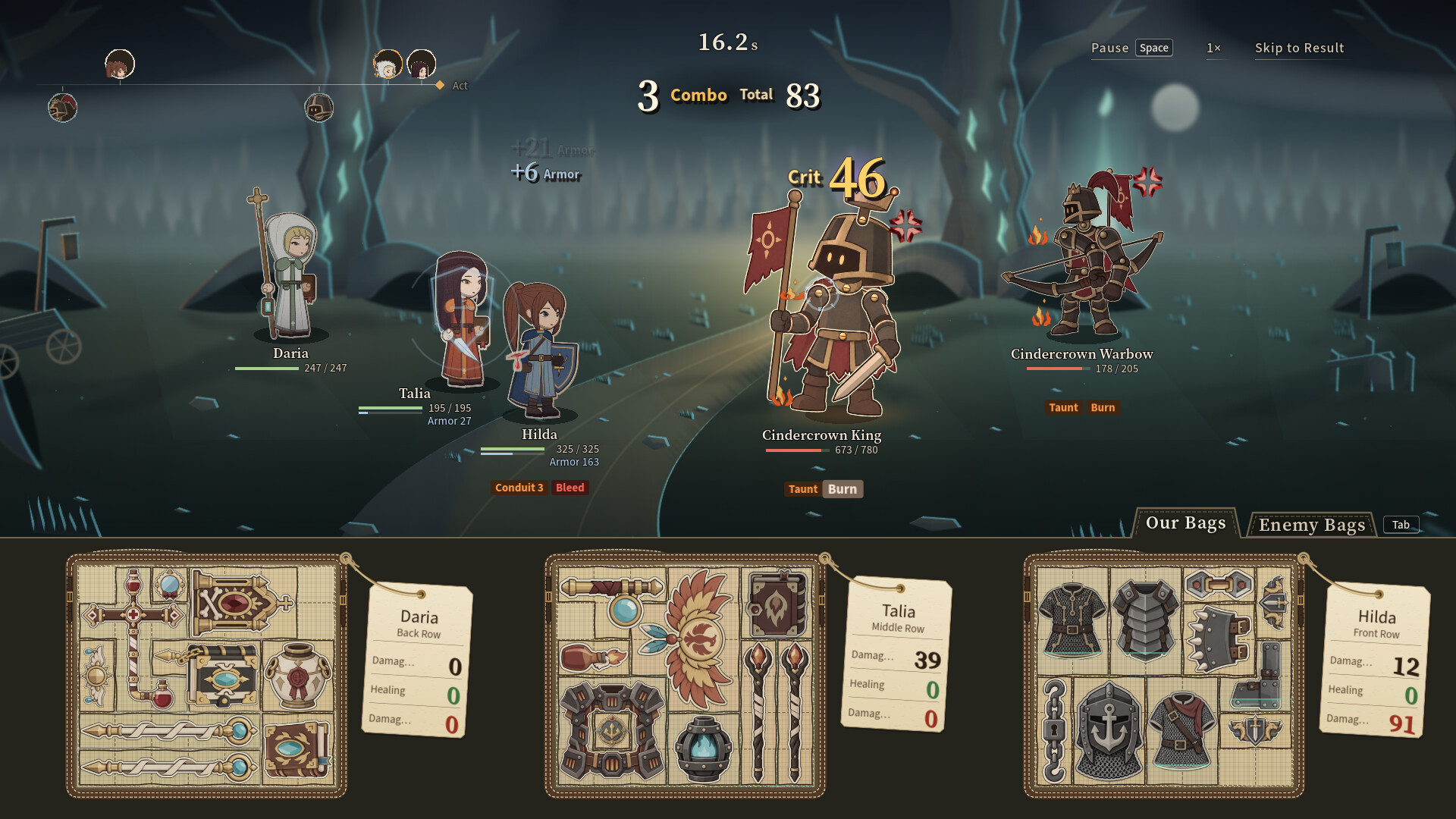
A loot decision usually starts with what an item does. Gravefire Tavern adds another question: where does it belong? SynGameLab’s upcoming backpack auto-battler connects item shape, placement and adjacency—what sits next to what. Weapons, shields, bottles and tools can form combinations that trigger one another. The appeal is a loadout whose arrangement matters alongside the individual pieces.
A bag is part of the party
A new item can change more than your equipment list. The question is whether it improves the combination you are building, and what must move to make room. These store descriptions outline the links without explaining every interaction.
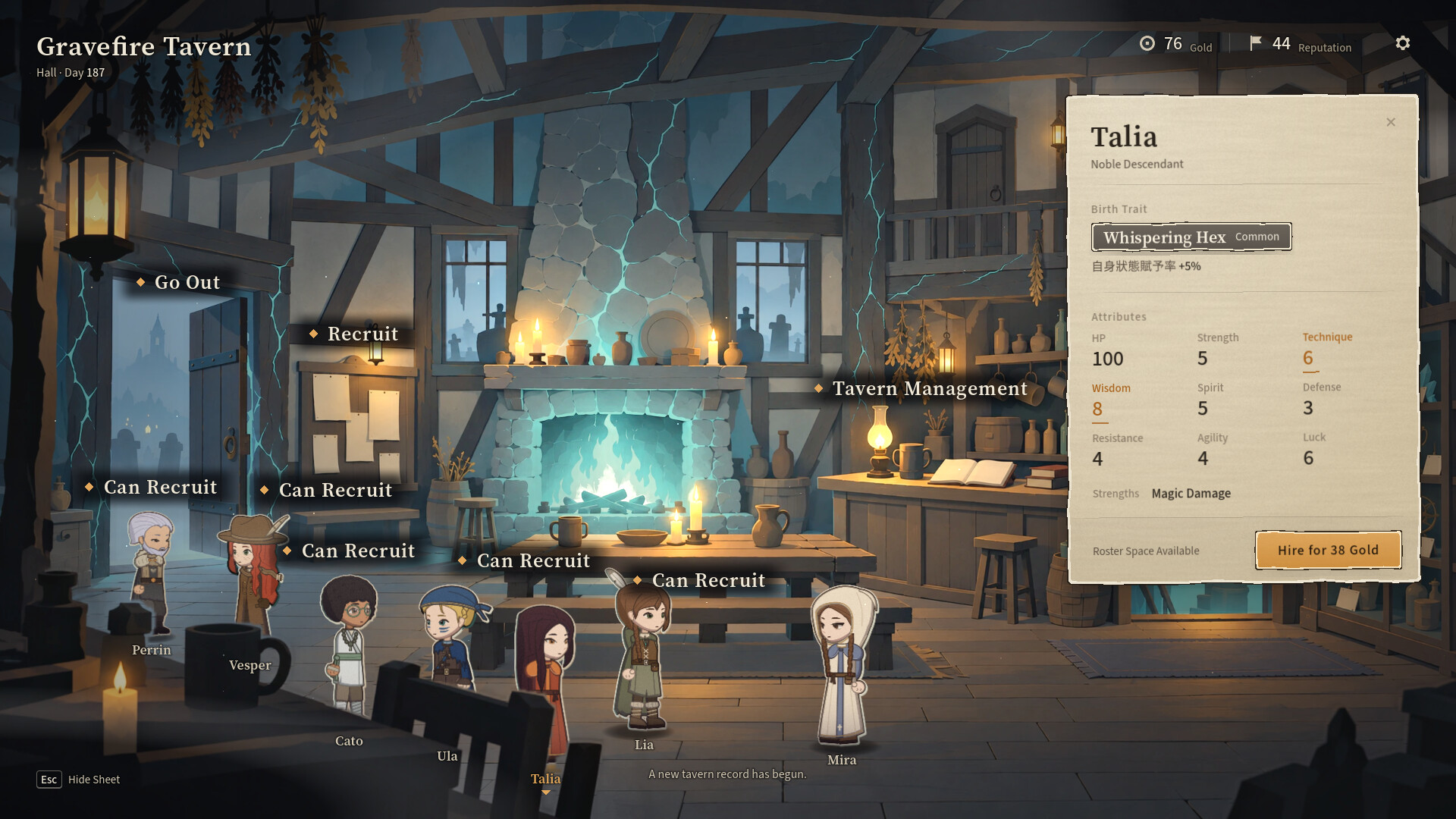
This preparation belongs to a single-player party of three adventurers. You recruit characters with different traits, choose a formation and prepare their loadouts before expeditions. The official battle image shows a separate equipment grid for each hero, with front-, middle- and back-row labels.
Bring the build home
Loot is temporary until you bring it back through the Gravefire. The developer describes a choice between pushing farther, taking on a stronger enemy and retreating with what you have. A promising arrangement still has to survive the trip home. That puts the backpack inside a longer loop of collecting, reorganising and choosing how much to risk.
The tavern links those trips through a warehouse, training ground, infirmary, blacksmith and graveyard. Adventurers may be wounded, retire or die permanently; their graves and histories remain. This larger promise interests me: different parties leave a continuing record around the same tavern.
A demo to try, with open questions
At the 2 November check, the full game was still marked “Coming soon”, with no purchase offer. A separate free Steam demo was available. Its description repeats the wider game’s systems without detailing which campaign parts it contains. That does not establish that every advertised feature is in the sample. The main page lists English and Traditional Chinese; the demo advertises six languages. Check the edition you intend to use.
Across all languages, the five visible demo reviews, posted on 19–23 October, were marked Recommended. Their comments are mixed. The 19 October player reports an improved interface but high difficulty; the 20 October review sees promise but rough UI. The longer 21 October review and the 22 October review raise readability, localisation and balance concerns, with different accounts of difficulty and injuries. The 23 October entry criticises the writing. Some reviewers also call the writing AI-generated. That is their interpretation; the production disclosure does not identify who wrote the story. This is a small, dated sample, not a test of the current build.
How AI fits into production
SynGameLab credits ChatGPT with producing all of the game’s source code. The developer then checked, tested, fixed and assembled that code. The art process starts with generated 2D images from game-specific prompts and continues through human choice, editing, cropping and composition before the images enter the game. The main and demo pages give the same account. They do not identify the story’s author or the origin of the audio.
The developer also says gameplay does not call a generative model or forward player input to an AI service. For me, the reason to follow Gravefire Tavern is the planned connection between a carefully packed bag, a changing party and a tavern that carries their history. The early feedback gives that idea something concrete to prove.