GAME DISCOVERY / SPATIAL DECKBUILDING
Cardboard Conquest: a card becomes an army
Pick a position, commit the hand, watch the clash. This papercraft deckbuilder puts the placement of your troops inside the card decision.
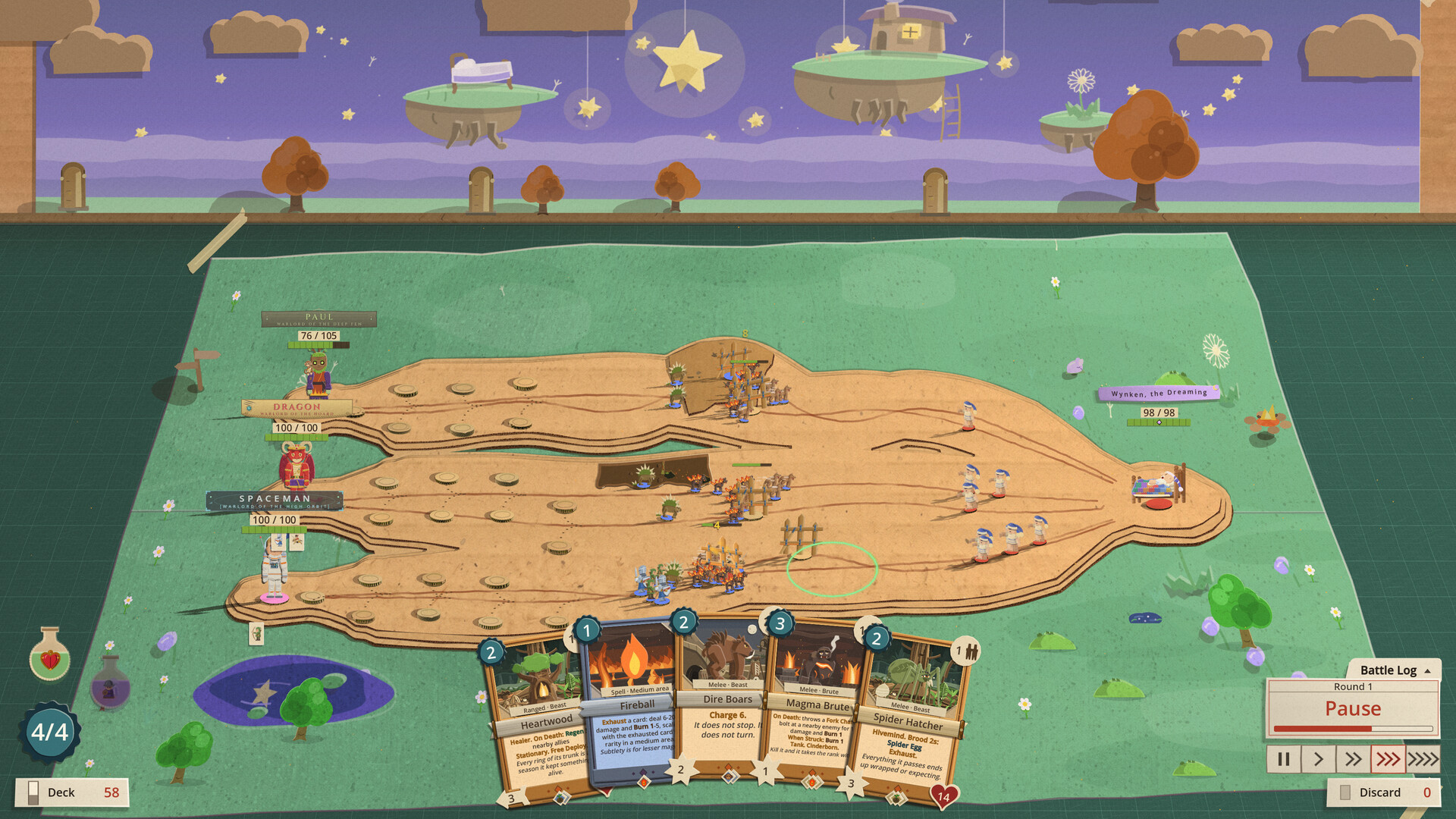
Choose the card and the ground
A card in Cardboard Conquest can put a squad, spell, trap or siege engine onto a particular spot on the board. That makes position part of the choice. A screen for archers, a blocked approach or a flanking force depends on where those paper pieces enter the fight.
The developer describes a loop of planning the deployment, pressing End Turn and letting the field move together. Automatic resolution gives the preparation a consequence: the formation you arranged becomes a battle to watch. The appeal is in connecting what is in your hand with what is already on the desk.
The draft supplies your vocabulary
At the start of a run, you choose themed packs that become your card pool. Slimes, ghosts, armored troops and other factions offer different ingredients for that deployment problem. Your commander’s appearance is assembled from the chosen packs too, carrying the draft into the papercraft presentation.
Spells, statuses and relics add further combinations. Branching routes and written events sit between the fights. The useful question is how a new option changes the army you can place, rather than how large a content total can become. Those totals are changing quickly while the playtest develops.
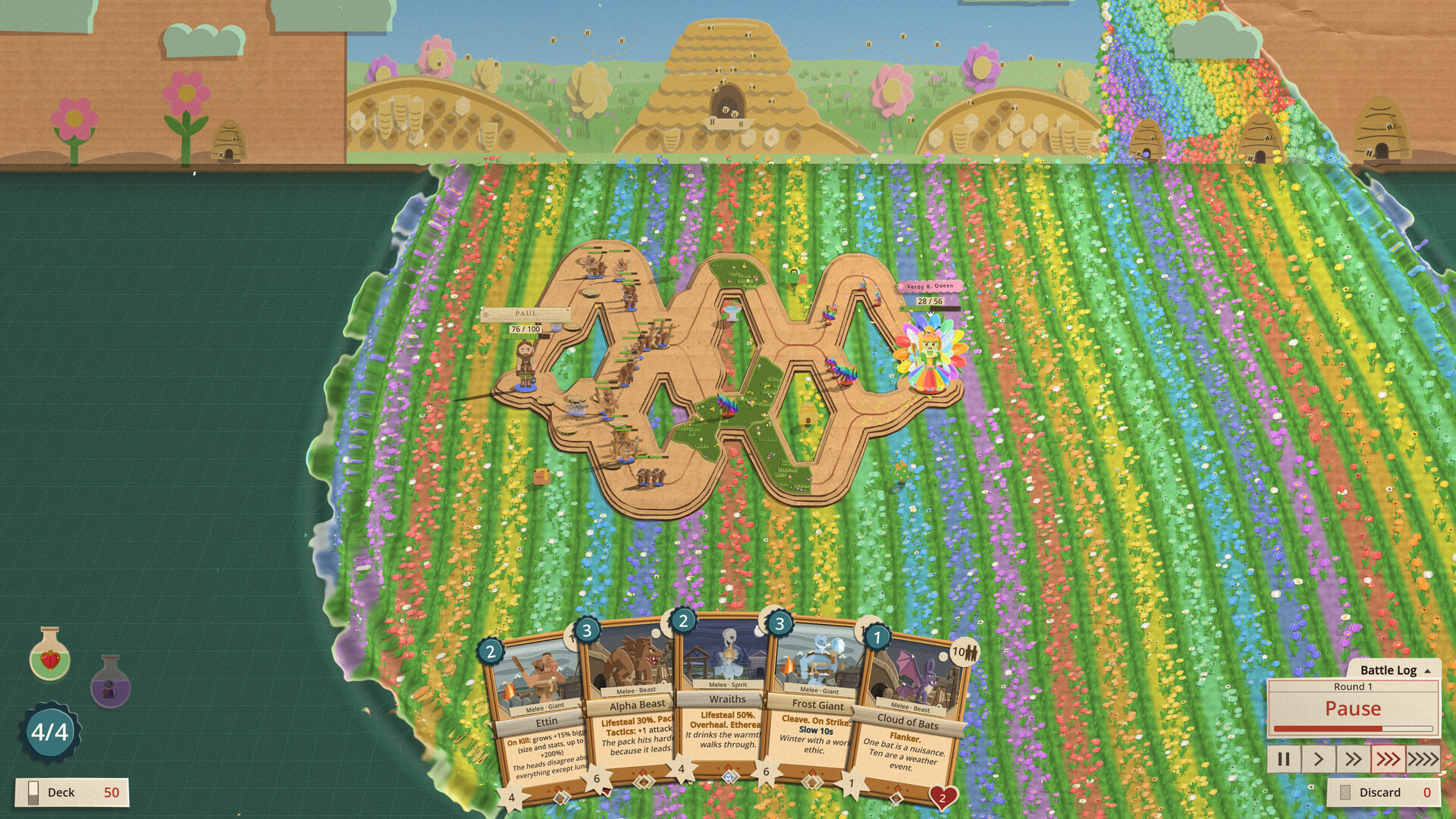
THE PRODUCTION, SPECIFICALLY
Painted images, music and human decisions
Steam identifies generated card art, event illustrations, background paintings and music, all reviewed, selected, edited and finalized by developer Paul Booth. These ship as fixed image and audio files. Booth retains the game’s design and balance, and describes its events as hand-written. The current disclosure supports substantial visual and audio production; it does not establish AI-written code or a measured automation percentage.
Where you can try it
The free public playtest is on itch.io, with a browser version and Windows, macOS, Linux and Android downloads. These versions are still changing; feature parity across them is not established. The 23 October developer update announces additional late-game content, while older store descriptions retain different totals.
Steam Early Access is planned for March 2027, with its price still to be announced. It is separate from the free itch.io playtest: no public Steam purchase or demo offer was present at this check. Treat the playtest as a developing build, not a finished release.
See the upcoming Steam game ↗ · For more discoveries and concrete production notes, follow the free AI Made Games curator.