UNDER THE HOOD / DREAMLAYER JAM
The weapon you loot
is the one that hit you.
In Mohammed Motawea’s Underbloom, the jaws you take from an enemy are the same jaws it attacked with. That rule shaped how the game’s AI-assisted art was made.
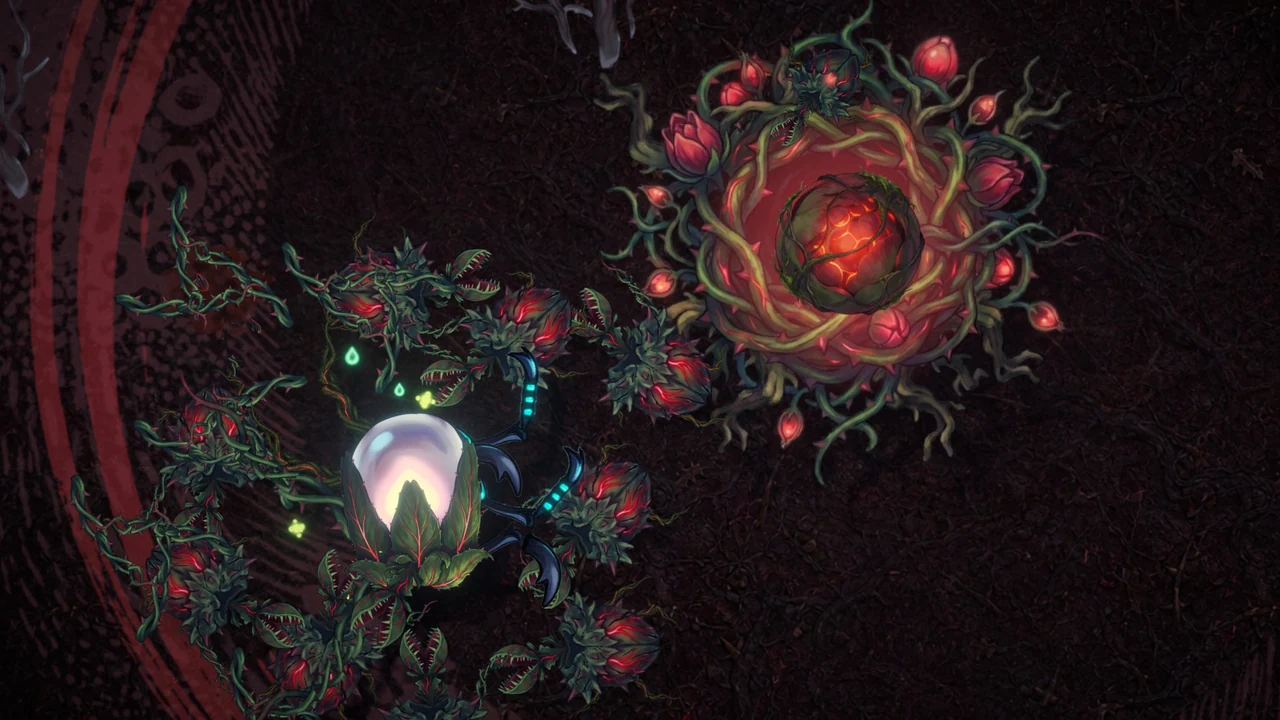
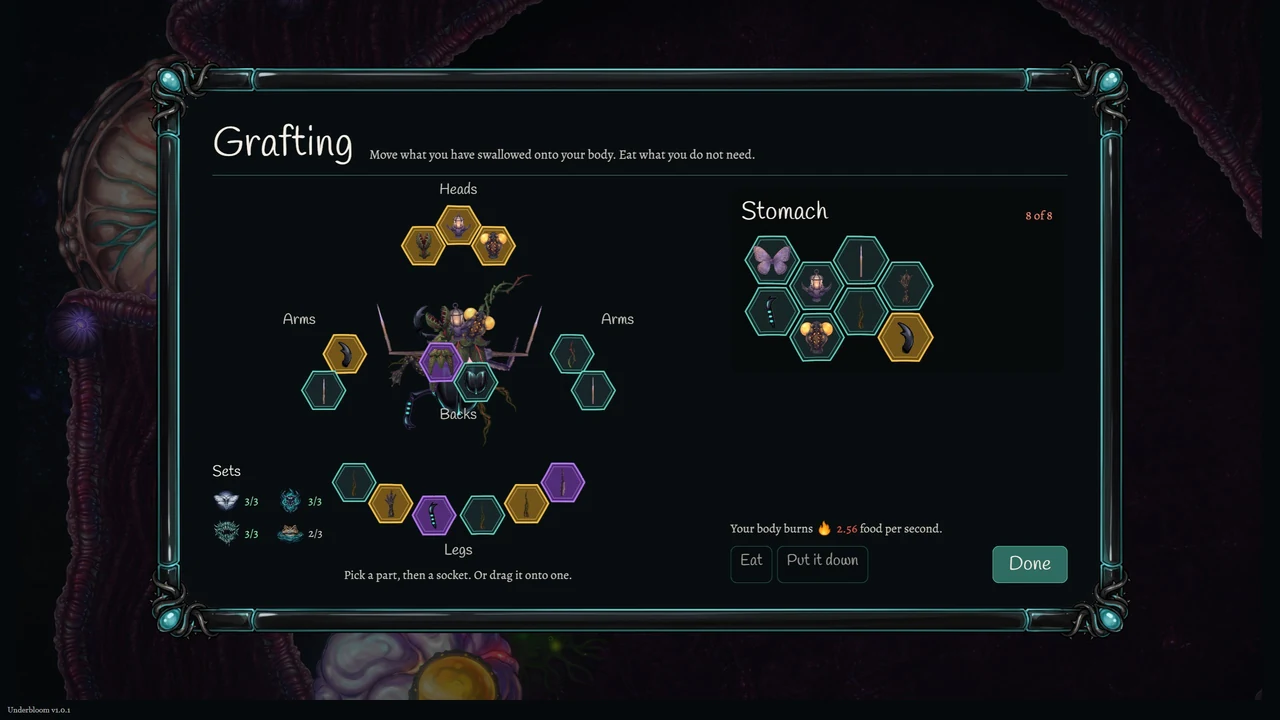
In Underbloom, a new set of legs can give you an escape move and make you harder to feed. You play a small jelly creature called the Glim. Step into a nest’s ring and the guards start coming. Their bodies are your next set of equipment. Parts can give you a new attack, improve your reach or help you move. Each part also raises your food needs. A bigger body is a way to survive the next fight and a reason to start one sooner. Game page and controls
Motawea’s game finished first overall in the October 2026 DreamLayer Jam. It also placed first for gameplay and creative use of DreamLayer. The entry received nine ratings. The game links below lead to Mo’s desktop browser build on itch.io. Creamhouse’s Steam game of the same name is a separate project. Official entry and results
A weapon you can recognise before it drops
Watch for the plant’s jaws or the toad’s head. The body part on the enemy tells you something about what you might gain from fighting it. Motawea says the game reuses the same jaw image when you graft it onto the Glim. Once it is yours, its movement comes from a rig in Unity. The inventory changes the creature you see on screen, down to how it walks and attacks. Developer’s creature breakdown
Give the image generator a shape the rig can use
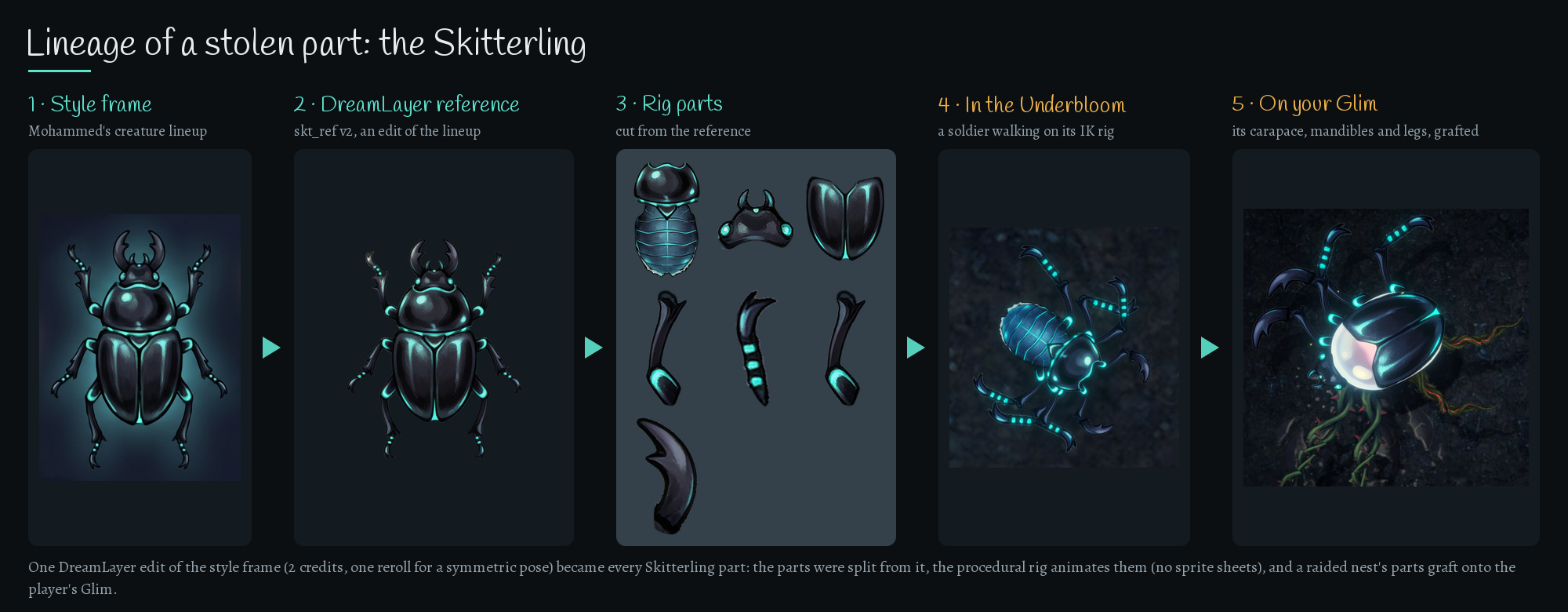
Motawea set the visual direction with a lineup. DreamLayer then produced an overhead reference for each species with the limbs separated. Parts came from that approved reference, and variants were edited from the base body so the joints stayed where the rig expected them. Magnific helped remove backgrounds, clean parts and produce environmental art. Creator’s jam disclosure
The foot still needs to touch the ground and the arm still needs to pivot at the shoulder. Motawea describes fitting the images to common canvas sizes, with pivots on the centre line and a shared lighting treatment. In the developer’s Skitterling breakdown, the pieces are visible between the reference and the in-game creature. The final image shows them on the Glim. That sequence makes the production constraint concrete. A striking creature image is only useful here if its parts can move on the enemy and fit the player afterwards. Developer’s art and rig breakdown
WHO DID WHAT
Separate the art, the code and the decisions
Motawea credits himself with design, architecture, art direction and QA. He describes Claude Code implementing the game in stages, each with a specification, a test pass and his approval. DreamLayer and Magnific assisted visual production. The credits list both licensed music and sound libraries and generated audio for some cues and effects. The creature motion described above is procedural animation in Unity. Production account · Full credits
Open Mo’s Underbloom on itch.io ↗
The creator lists keyboard and mouse on desktop browsers. Gamepad support is marked beta. Sources checked 10 November 2026. Gameplay images are supplied by the creator.