BROWSER GAMES / ALL TOOLS ALLOWED #3
Make the shot miss.
Make the spider lose track.
Trick Shot and Hollowgrin build their central decisions around a trick. Their creators also explain what AI actually produced.
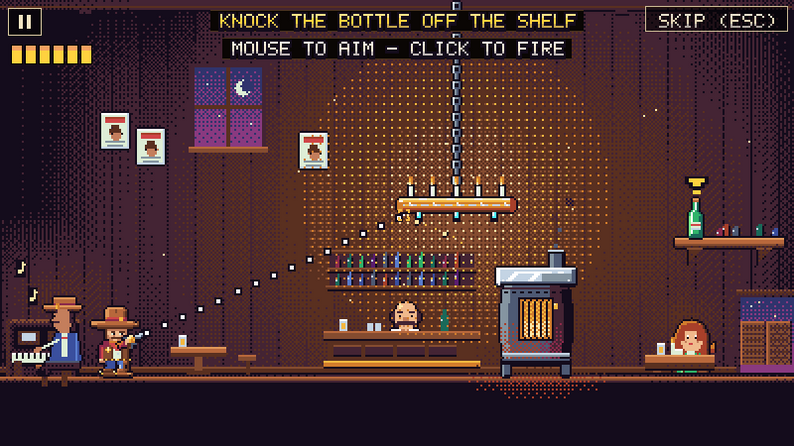
A straight shot is the wrong answer in Trick Shot. In Hollowgrin, the familiar cup-and-candy game puts you in charge of hiding the prize from a monster. Both turn a simple action into a small problem of deception.
They finished first and second in the published overall results of All Tools Allowed #3. That is a reason to look closer, with some context: Trick Shot received eight ratings and Hollowgrin eleven. The event had 43 entries and 274 ratings in total; voting was for participants and invited judges. These are jam results from a small panel, rather than a broad player verdict.
Trick Shot: the route matters more than the target
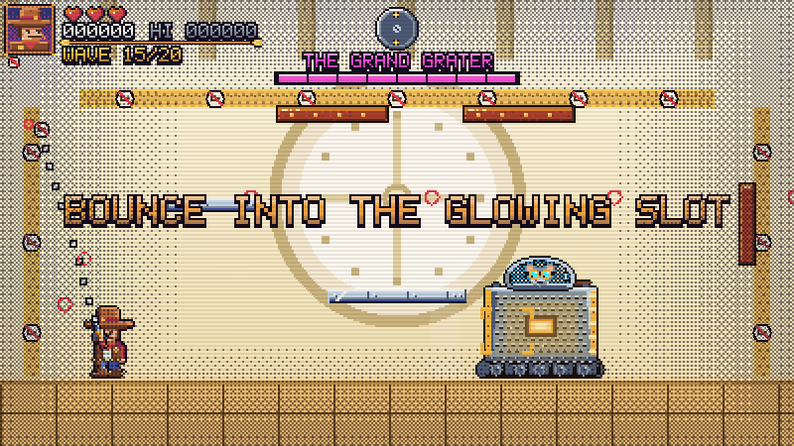
Creator vendatta77's rule is clear: a bullet must bounce before it can hurt an alien. You have six rounds, so the question becomes where to send each one. Walls and metal surfaces become part of the weapon. Shielded enemies add another decision: the creator describes a front attack needing two bounces, while an attack from behind or above needs one.
The official images show a useful visual guide for that problem. A dotted line carries the proposed shot through the room; a later boss screen asks for a bounce into a narrow opening. The appeal is reading the space and changing the angle, rather than only moving the crosshair faster.
Hollowgrin: make an observer look in the wrong place
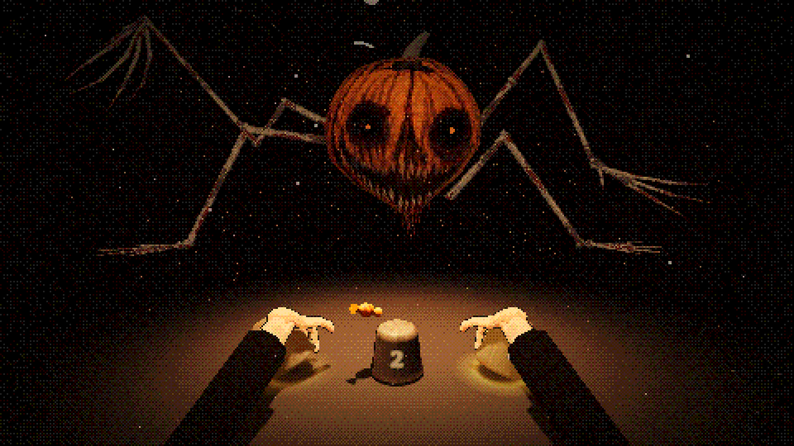
Slava Volkov's game reverses the usual shell game. You move the cups while a pumpkin-headed spider tracks the candy. If it chooses an empty cup, you win the round. If it finds the candy, the punishment is a finger.
The creator describes tricks based on hiding information: cups crossing in front of each other, a candy transfer behind a cup, or a swap while the creature looks away. A glowing cup signals its attention. Repeating the same trick becomes less useful as it grows more watchful. That gives the horror a readable tactical question: when has it lost track, and when should you stop moving?
Content note: Hollowgrin includes blood and graphic finger injuries. Its official page provides keyboard and touch controls. Both games currently offer a browser-launch button on their own pages.
THE PRODUCTION, SPECIFICALLY
Code can make the picture and the sound
- Trick Shot
- The creator credits a Gemini starting prototype, then Claude-written code, code-drawn pixel art, synthesized audio, story text and build testing. Human work includes the concept, theme and story decisions, playtesting and final choices.
- Hollowgrin
- Volkov credits Claude Code for the implementation, synthesized sound and creature voice, and playtest tools. Two ChatGPT-generated pictures supply the creature's face textures. The credits also identify three.js, Blender scripting and named fonts.
These are concrete developer accounts of substantial production assistance. Drawing sprites or synthesizing a voice from shipped code is a different process from asking a language model to generate a new response during play. The credits do not describe the spider as a live language-model opponent.
What the results can tell us
My reason to put these games together is the clarity of their rules. One redirects a bullet; the other redirects an observer. The interesting AI story is how those rules became working code, images and sound under a creator's decisions.
The jam allowed a wide range of tools, so entering it alone does not establish how much AI a game used. The two individual disclosures provide that evidence here. Neither a rating position nor a tool list measures an authorship percentage.
Sources: the event rules and schedule, its overall results, and the exact Trick Shot and Hollowgrin creator pages, checked 5 November 2026 UTC. Images come from those public game pages. Current descriptions may include changes made after the jam deadline.